
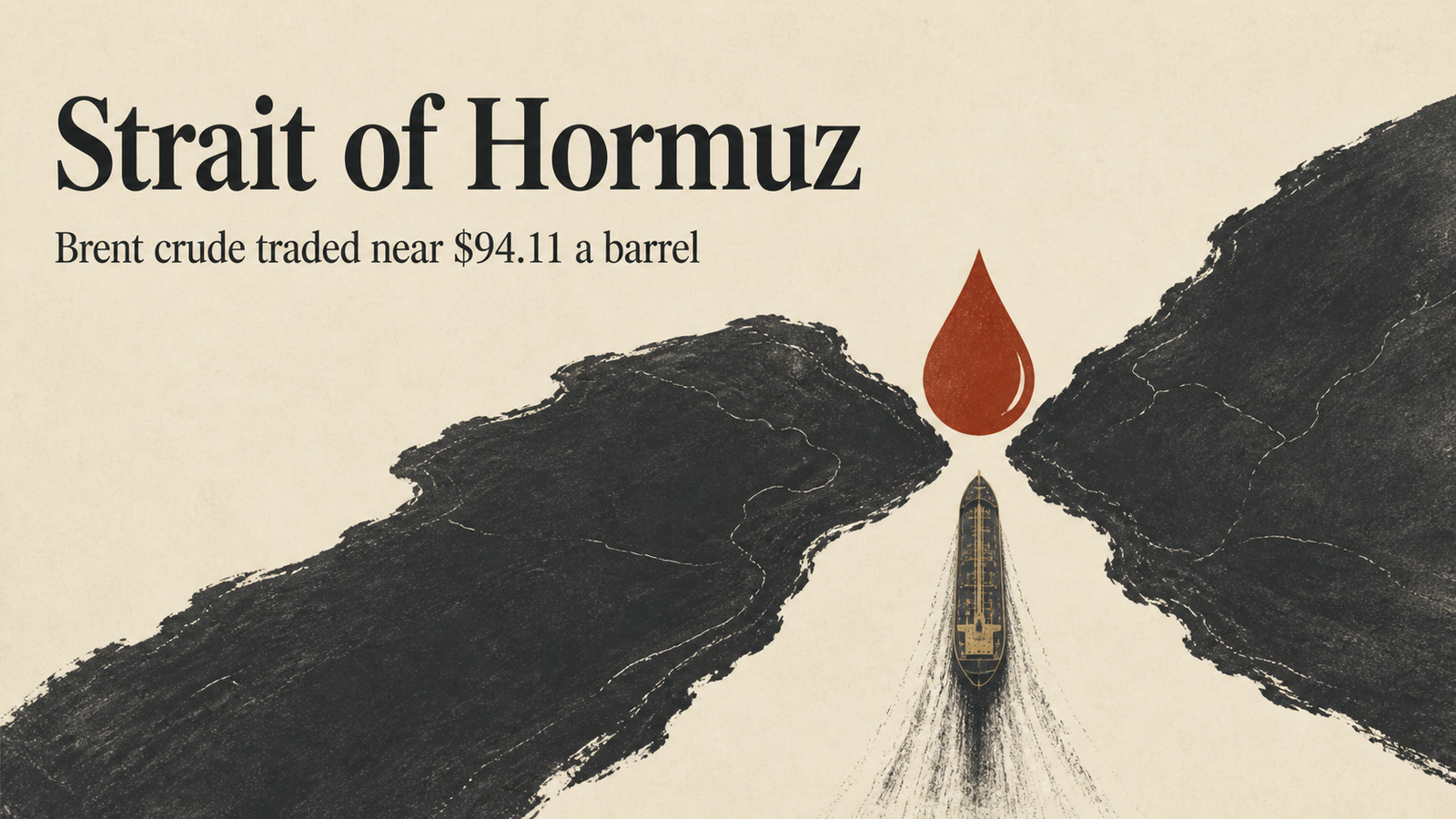
The dominant story overnight was a fresh escalation between the US and Iran: the US struck Iran on September 1 after what it said was a failed Iranian attempt to mine the Strait of Hormuz and target a US base in Jordan, following an attack on two supertankers in the strait on August 31. Iran retaliated with strikes on US-linked targets in Jordan — King Hussein Air Base and Al-Azraq Air Base, with Jordan's military saying it shot down eight incoming missiles — and a drone incident the UAE engaged over its territorial waters. US Central Command said it hit Iranian air defense, communications and radar sites in response. Equities fell on the news, compounding an already-hawkish turn from the Federal Reserve.
What to watch
Today's US calendar brings the ADP Employment Report (8:15am ET), Factory Orders and Durable Goods Orders (10:00am ET), and the Fed's Beige Book (2:00pm ET); the Bank of Canada also holds a policy meeting. The bigger date to watch is the September 15–16 FOMC meeting: after Fed Chair Kevin Warsh's hawkish Jackson Hole speech on August 28 — warning that "inflation is running above our 2% target" — market-implied odds of a 25bp hike jumped to about 60%, from roughly 35% before he spoke, reversing what had been rate-cut expectations. The Fed's target range has held at 3.50–3.75% since a hold at the July 29 meeting.
Markets
The S&P 500 fell 0.71% to 7,631.47, the Nasdaq Composite dropped 1.03% to 26,099.77, and the Dow Jones Industrial Average lost 419.02 points (0.79%) to 52,766.88. Nike closed at $38.07, its lowest level in over two decades, while Wynn Resorts, Las Vegas Sands, VICI Properties and Carnival all touched 52-week lows as travel and leisure names absorbed the oil-driven cost and demand worries. The major indices remain on track for a fourth straight annual gain if the trend holds.
In Europe, the FTSE 100 slipped 0.32% to 10,789.28, the CAC 40 fell 0.39% to 8,301.85, and the Euro Stoxx 50 dropped 0.80% to 6,368.98. The DAX was the hardest hit of the major EMEA benchmarks, down 1.10% to 25,970.11 — a reflection of Germany's heavier exposure to energy and industrial input costs, versus London's commodity- and bank-heavy index offering more of a cushion.
Commodities
Brent crude traded near $94.11 a barrel, advancing for a second straight session as the Strait of Hormuz strikes and Iran's retaliation against Jordan and the UAE raised the risk to a critical global oil corridor. Gold, by contrast, slid to the $4,302–$4,450/oz range — a two-week low — as hawkish Fed rate-hike expectations raised the opportunity cost of holding bullion and outweighed the metal's usual safe-haven bid during a live military escalation.
Crypto
Bitcoin opened September 1 at $78,559.11, up 1.1% from Monday, before slipping to $77,945.97 by mid-morning ET as inflation concerns weighed on risk appetite. Ethereum opened at $2,467.13 (+2% from Monday) and eased to $2,454.23 over the same stretch. On the regulatory side, the SEC on August 18 proposed "Regulation Crypto Assets," its first major bespoke crypto rulemaking — a "fit-for-purpose" framework that would let certain crypto investment-contract offerings proceed without full Securities Act registration, with a safe harbor once an issuer has wound down the managerial efforts it promised. The proposal's public comment period runs 60 days from Federal Register publication, marking a shift after roughly a decade of the SEC leaning mainly on informal guidance and enforcement.
What it means for crypto trading
The near-term risk for crypto is the convergence of two live catalysts: a Fed that has swung from rate-cut expectations to roughly 60% odds of a September hike, and an escalating Mideast conflict threatening Strait of Hormuz oil flows. Bitcoin and Ethereum are already softening on inflation concerns ahead of the September 15–16 FOMC decision, and a confirmed hike would likely extend pressure across risk assets broadly. Further escalation around Hormuz — or any surprise from the Beige Book on inflation — is the more immediate wildcard between now and the Fed meeting.
Sources:
- CNBC — Stock market news for Sept. 1, 2026
- Bloomberg — Stock Market Today: Dow, S&P Live Updates for September 2
- CNBC — US completes fresh strikes on Iran as Mideast tensions flare again
- NPR — Attacks flare between the U.S. and Iran after a monthlong pause
- Wikipedia — 2026 Strait of Hormuz crisis
- Yahoo Finance — Current price of oil as of September 1, 2026
- Yahoo Finance — Gold prices today, Tuesday, September 1, 2026
- SEC — SEC Proposes New Regulation Crypto Assets
- Yahoo Finance — Bitcoin and ethereum prices today, Tuesday, September 1, 2026
- CNBC — Markets see Warsh endorsing a rate hike in September
- CNBC — Kevin Warsh sharpens inflation warning at Jackson Hole
- Scotiabank — Calendar of Economic Release Dates, September 2026