
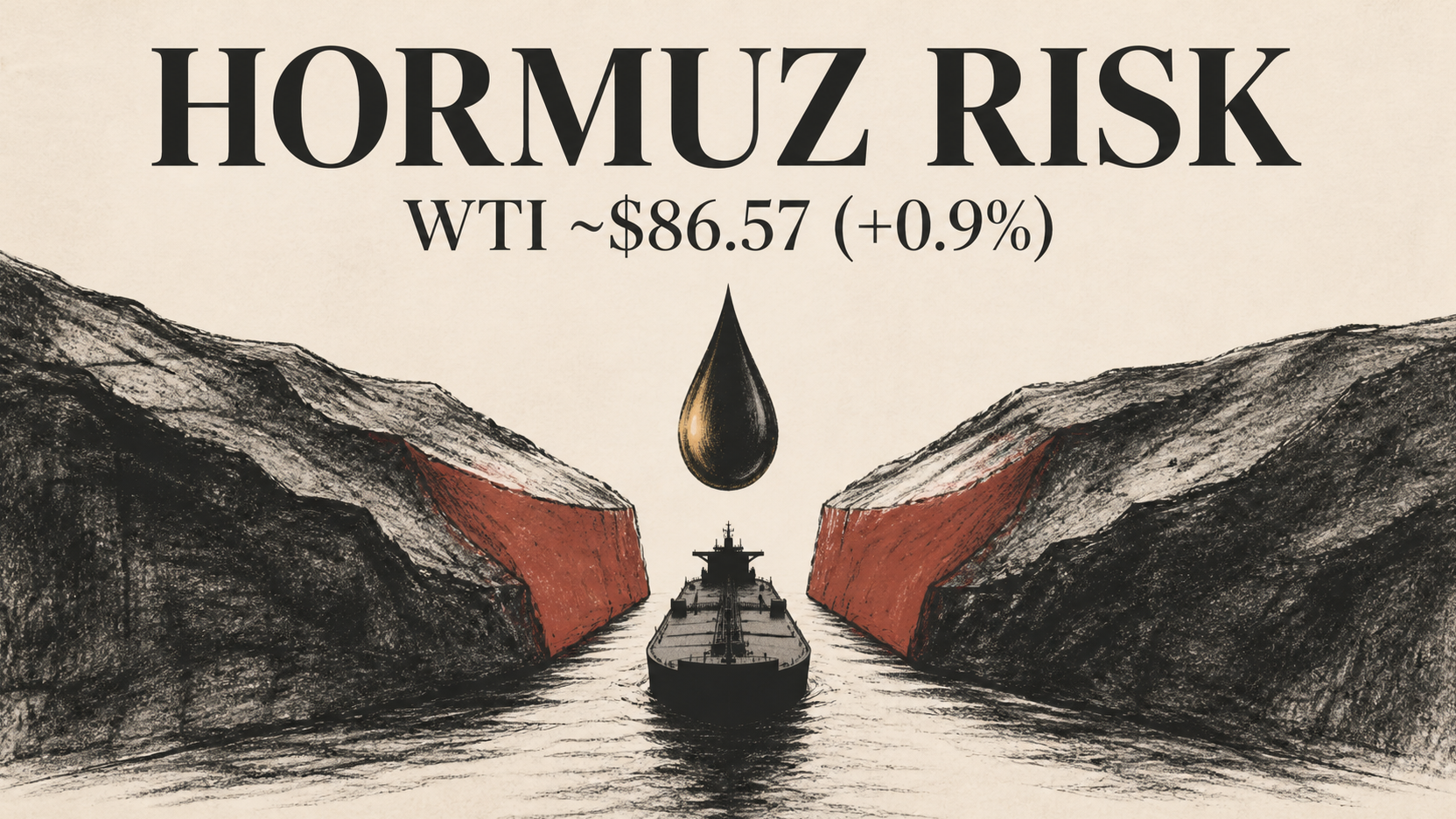
The US and Iran traded fire again near the Strait of Hormuz over the weekend, sending crude higher and knocking equities lower into the close of August. The move compounds a shift already under way in rates: Fed Chair Kevin Warsh's hawkish remarks at the Jackson Hole symposium on August 28 pushed September rate-hike odds from roughly one-in-three to above 50%, an unusual hike-leaning setup heading into the next FOMC meeting.
What to watch
The ISM Manufacturing PMI for August is due today at 10am ET, the first notable data point of the new month. The next FOMC decision lands on September 16; futures currently price around 56% odds of a 25-basis-point hike versus 44% for no change — a reminder that the market's next move is being framed as a hike risk, not a cut, for the first time in this cycle.
Markets
US stocks closed August 31 lower: the S&P 500 fell 0.33% to 7,686.14, the Dow lost 374 points (-0.7%) to 53,185.90, and the Nasdaq Composite slipped 0.12% to 26,370.89. PayPal was the session's standout loser, tumbling as the fallout continued from Stripe and Advent International's abandonment of their $53 billion takeover bid, which had briefly driven the stock up around 30% before the deal fell apart.
In Europe, FTSE 100 trading was closed for the UK's summer bank holiday. Germany's DAX fell 0.7%, the region's worst performer, ahead of euro-area inflation data, while the Stoxx 600 eased 0.1% to about 655.5 — still on course for a fifth consecutive monthly gain despite the Iran-driven volatility.
Commodities
WTI crude rose to roughly $86.57 a barrel (+0.9%), extending Monday's 2.6% jump to about $85.60 as the renewed US-Iran exchange revived concerns over shipping security through the Strait of Hormuz. Gold pulled back below $4,450 an ounce, retreating on the hawkish Fed repricing and a firmer dollar.
Crypto
Bitcoin traded around $77,700-$78,000 and ether around $2,450-$2,480, both softer as rate-hike expectations and dollar strength weighed on risk assets. Bitcoin ETFs recorded a $202 million net outflow, ending a nine-day inflow streak that had helped drive August's roughly 23% price surge and a brief break above $81,000.
What it means for crypto trading
The combination of a hike-leaning Fed and an escalating Iran/oil shock is a classic risk-off setup for crypto: a stronger dollar and higher real-rate expectations directly compete with non-yielding assets like bitcoin and gold. The near-term catalysts to watch are today's ISM print, any further Strait of Hormuz escalation that could keep energy costs elevated, and the September 16 FOMC decision itself — a confirmed hike would likely extend the pressure on both crypto and gold, while a hold could spark a relief rally.
Sources:
- Fed's Warsh says interest rates may need to be raised — Spectrum News
- Jackson Hole analyst roundup: Warsh's speech sends hike chances higher — CNBC
- Stock market news for Aug. 31, 2026 — CNBC
- S&P 500 Closes Lower as Dow Leads the Selling on August 31 — 24/7 Wall St.
- Why PayPal (PYPL) Shares Are Plunging Today — Yahoo Finance
- European stocks ease as U.S.-Iran strikes fuel oil rally — Investing.com/Reuters
- WTI Crude Oil Price Analysis for September 1, 2026 — FX Daily Report
- Bitcoin holds $78,000 as ETFs see $202 million outflow, oil surges on US-Iran conflict — Coin-Turk
- Bitcoin ETFs End Inflow Streak as Fed Rate Concerns Mount — Yahoo Finance
- Next FOMC Meeting: September 16, 2026 — Finance Calendar
- Fed rate cut by...? Predictions & Odds 2026 — Polymarket